Role of Machine learning/AI in Industry

WHAT IS MACHINE LEARNING
Machine Learning jobs

- Data Analysts – Data Analysts monitor processes, evaluate data quality, and monitor production model performance. This allows for more senior roles to focus on innovation, not maintenance.
- Data Engineers – Data Engineers are responsible for building and maintaining the technical infrastructure required for modeling, predictions, and analysis. These professionals create and maintain databases, machine learning pipelines, and production processes.
- Data Scientists – Data Scientists own the modeling process. In general, they take input parameters from product or other team leads in order to understand the model’s business objective. They then work to articulate requirements to the engineers and other stakeholders. Once these criteria have been defined, the process of building tests, models, and evaluating performance begins.
- Machine Learning Engineers – With backgrounds and skills in data science, applied research, and heavy-duty coding, these professionals run the operations of a machine learning project and are responsible for managing the infrastructure and data pipelines needed to bring code to production.
possible Machine learning skill areas

According to a survey from Tech Pro Research, only 28% of companies have some experience with AI or Machine Learning, and more than 40% said their enterprise IT personnel don’t have the skills required to implement and support AI and/or Machine Learning. Below are some key skill areas that are required to work in the field of Machine Learning:
- Probability – Most machine Learning algorithms are about dealing with uncertainty and making reliable predictions. The mathematical tools to deal with such settings are found in principles of probability and its derivative techniques.
- Statistics – Also of importance are tools and techniques that enable the creation of models from data. Machine Learning algorithms are often built upon statistical models.
- Data Modeling – Data modeling is a representation of the data structures in a table for a company’s database and is a very powerful expression of the company's business requirements.
- Data Science – Data science is an interdisciplinary field that uses scientific methods, processes, algorithms, and systems to extract knowledge and insights from data in various forms, both structured and unstructured, similar to data mining.
Some Facts about ML/AI

* AI technologies will be in almost every new software product by 2020
* 40% of adults now use voice search at least once per day
* 80% of businesses plan to adopt AI as a customer service solution by 2020
* There’s been a 14X increase in active AI startups since 2000
* By 2020, 90% of cars will be connected to the internet
* Business execs are turning to AI to cut out repetitive tasks such as paperwork (82%), scheduling (79%) and timesheets (78%)
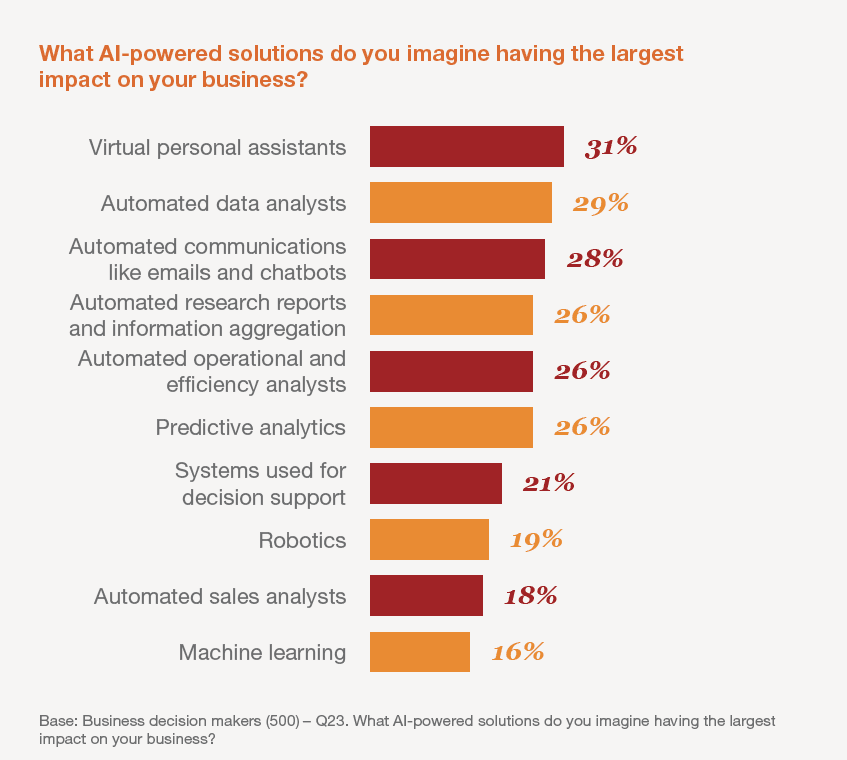
* The three most in-demand skills on Monster.com are machine learning (ML), deep learning and natural language processing (NLP)
* By 2020, AI will eliminate 1.8 million jobs and create 2.3 million
How industry adopt machine learning
Machine learning is quickly being adopted by companies in a variety of industries. We often hear about tech companies like Facebook that use machine learning in multiple areas from targeted advertising to photo tagging. However, the uses of machine learning expands past the tech industry, and almost any company in any industry can benefit from implementing these services. Unfortunately, many business leaders do not yet know much about machine learning and, as a result, may be hesitant to pursue these services for their company.
Recent AI Tools leveraged by Tesla

Throughout its journey, AI and Big Data have remained steady partners of the firm. Tesla has taken excellent use of AI and Big Data for expanding its customer base. The firm has made use of existing customer databases for its data analytics using it to comprehend customer requirements and regularly updating their systems accordingly.
In the case of Artificial Intelligence, Tesla has leveraged it to focus on mainly 2 areas: All electric propulsion and autonomous driving.
Initially, Tesla had collaborated with Nvidia to optimize it’s AI integrated chips. Later dropping Nvidia, the company vowed to create its own chips. With these chips, the firm aims to ensure that the cars are able to navigate through not only the freeways but also through local streets as well as traffic signals.
Throughout its journey, AI and Big Data have remained steady partners of the firm. Tesla has taken excellent use of AI and Big Data for expanding its customer base. The firm has made use of existing customer databases for its data analytics using it to comprehend customer requirements and regularly updating their systems accordingly.
In the case of Artificial Intelligence, Tesla has leveraged it to focus on mainly 2 areas: All electric propulsion and autonomous driving.
Initially, Tesla had collaborated with Nvidia to optimize it’s AI integrated chips. Later dropping Nvidia, the company vowed to create its own chips. With these chips, the firm aims to ensure that the cars are able to navigate through not only the freeways but also through local streets as well as traffic signals.
In a recent Hot Chips conference Tesla confirmed that its performance has largely boosted owing to the heavy optimisations in the AI chip. A massive number of transistors have been used - 6 billion -- which constitute the processing circuitry for each of Tesla's chips.
Tesla’s in-house expertise in case of software and battery manufacturing has also helped in giving it an edge over its fellow manufacturers. The firm’s new AI technology aims at setting a milestone for mass-market automation for cars.
Dual Chips
The Tesla system consists of two AI chips in order to support it for better road performance. Each of the AI chips makes a separate assessment of the traffic situation for guiding the car accordingly. The assessment of both chips is then matched by the system and followed if the input from both is the same.
Optimised Design
These AI chips have been optimised to run at 2 GHz and perform 36 trillion operations per second, achieving this level of performance by dismissing all generic functions and channelling the focus on only the important ones. Having taken over 14 months of severe research and involvement the chip was designed with Samsung now manufacturing the processor. The chip will be installed in both the new Tesla cars as well as the old models.
These AI chips have been optimised to run at 2 GHz and perform 36 trillion operations per second, achieving this level of performance by dismissing all generic functions and channelling the focus on only the important ones. Having taken over 14 months of severe research and involvement the chip was designed with Samsung now manufacturing the processor. The chip will be installed in both the new Tesla cars as well as the old models.
Interesting👍
ReplyDeleteSahid bhai OP
ReplyDelete